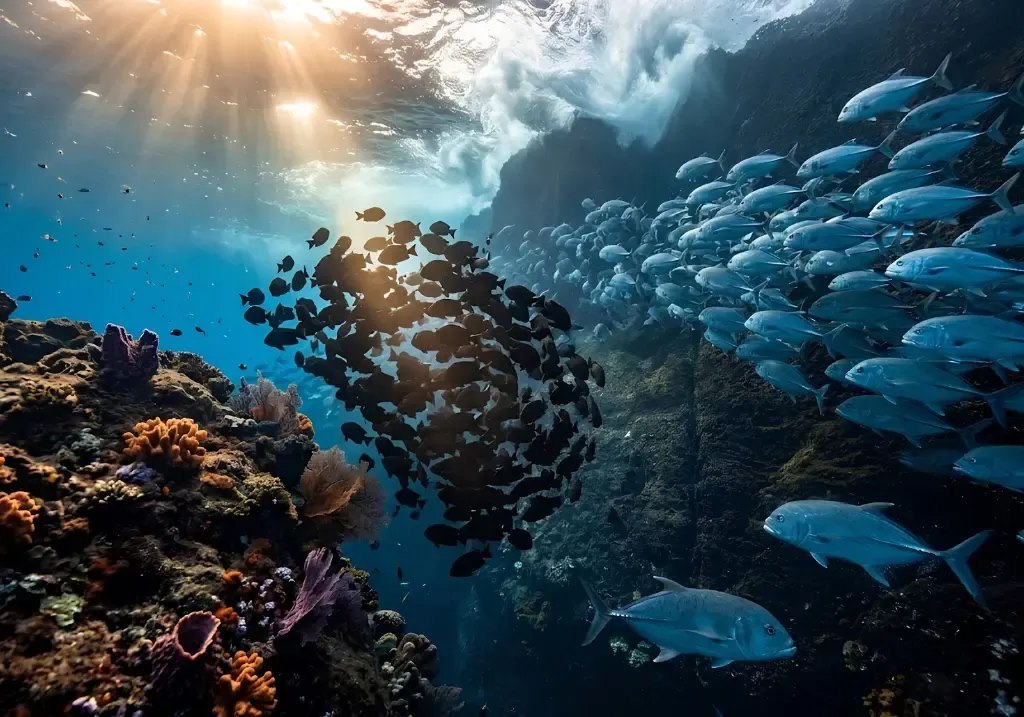
Oceanic Mind Science
Applied fisheries science for complex marine systems.
Oceanic Mind Science provides expertise in stock assessment, fisheries monitoring, survey design, and resource management, working with public agencies, Indigenous organizations, industry, and research partners to support informed fisheries decisions.
Our Services
Scientific Expertise
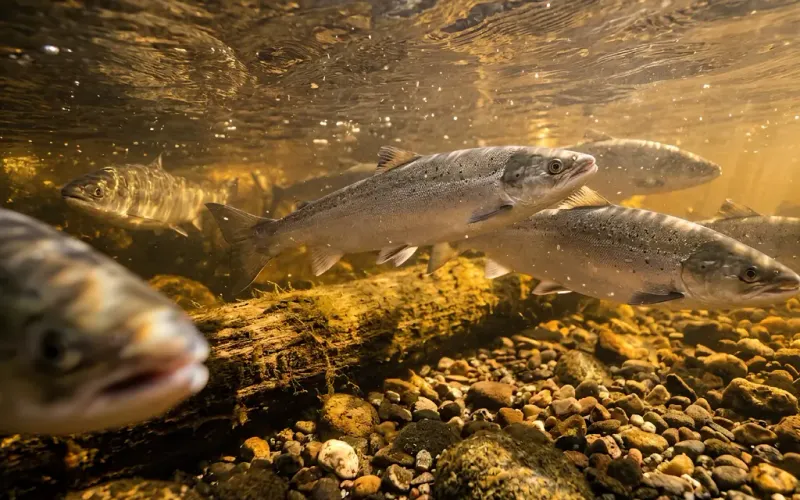
Fisheries Monitoring & Survey Design
Practical, statistically sound monitoring systems that produce clear, useful information for long-term stewardship.
Read overview Collapse overview
- Fishery-independent survey design & stratification
- Fishery-dependent monitoring & catch sampling
- Electronic reporting & spatial data collection
- Data QA/QC and standardization protocols
Many fisheries collect large amounts of information while still lacking the data needed to support confident long-term management. Monitoring programs often evolve over time and become disconnected from management goals, operational realities, or community priorities.
Oceanic Mind Science helps fisheries, communities, Indigenous organizations, and management agencies develop practical monitoring systems. This includes biological sampling protocols, fishery-independent surveys, spatial monitoring, reporting systems, and community-based programs that integrate scientific data with fisher observations and traditional knowledge.
The goal is not simply to collect more data, but to improve data quality, consistency, and usefulness for long-term stewardship.
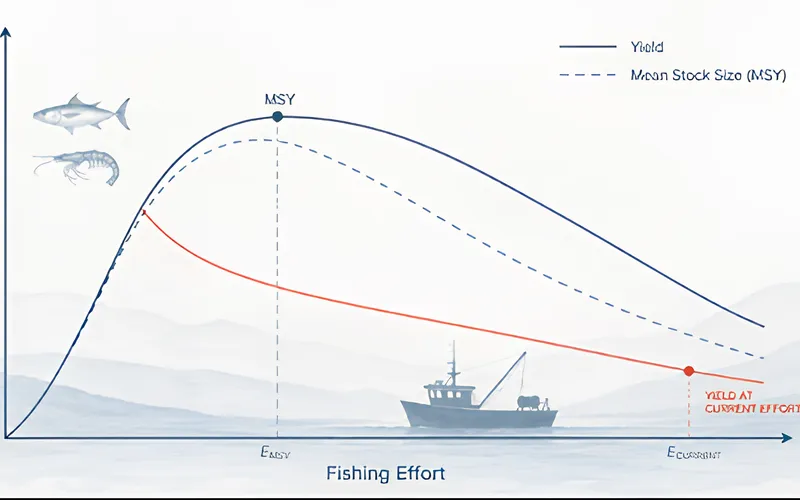
Stock Assessment & Science Advice
Quantitative assessment approaches and science advice matched to the fishery and available data.
Read overview Collapse overview
- Quantitative population dynamics modeling
- Biological reference points & harvest control rules
- Risk assessment & uncertainty evaluation
- Science-to-management decision support
Fisheries differ enormously in their ecology, uncertainty, governance, and available information. Some possess decades of monitoring data, while others operate with fragmented records, uncertain stock boundaries, or limited scientific capacity.
Our team brings experience in developing assessment approaches suited to the realities of each fishery. Work includes stock assessment modeling, survey design, simulation testing, spatial analyses, uncertainty evaluation, limit and target reference point estimation, and harvest strategy development.
Particular emphasis is placed on producing advice that is scientifically credible, understandable, and practical for real-world management decisions.
Scientific Reviews & Species Assessments
Rigorous technical reviews, species status evaluations, literature syntheses, and peer-review science advice.
Read overview Collapse overview
- Species status assessments (COSEWIC / international criteria)
- Technical report writing & scientific documentation
- Literature reviews & comprehensive data syntheses
- Independent scientific peer review & advisory documents
- Evidence reviews for regulatory and management decisions
Applied fisheries management requires independent, defensible scientific synthesis. We provide preparation and rigorous review of technical fisheries reports, species status assessments, scientific literature syntheses, data reviews, peer-review documents, and science advisory products.
Our work supports national and international evaluation processes (such as COSEWIC, FAO, and multilateral reviews), translating complex biological and operational data into clear, evidence-based documentation for management authorities and conservation partners.

Data-Limited & Emerging Fisheries
Pragmatic, locally grounded assessment frameworks and adaptive management under high uncertainty.
Read overview Collapse overview
- Data-limited assessment methods & empirical indicators
- Community-based monitoring & participatory science
- Precautionary harvest strategies & adaptive frameworks
- Operational support for emerging marine fisheries
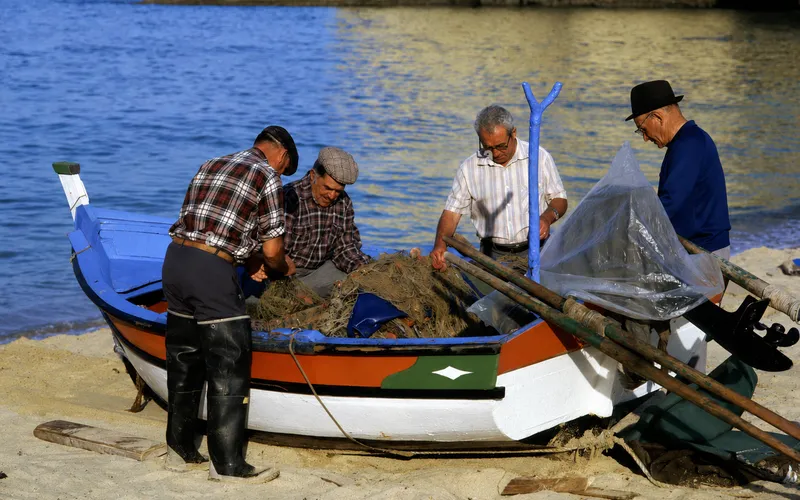
Small-scale and emerging fisheries often face a difficult balance between economic dependence, limited institutional capacity, and increasing pressure on marine resources. In many regions, fisheries provide essential livelihoods and food security while operating with limited monitoring and little access to long-term scientific support.
Oceanic Mind Science supports practical, locally grounded approaches that remain scientifically useful while acknowledging these constraints directly. This includes low-cost monitoring systems, community-based data collection, adaptive management frameworks, and data-limited assessment approaches capable of functioning reliably under imperfect conditions.
Collaborative Resource Management
Science-based dialogue bridging empirical evidence, Indigenous stewardship, and community priorities.
Read overview Collapse overview
- Technical advisory for co-management tables
- Integration of Indigenous knowledge and scientific data
- Accessible communication of ecological uncertainty
- Multi-stakeholder technical working groups
Many marine resource challenges are not purely scientific problems. They emerge where ecological uncertainty intersects with livelihoods, Indigenous rights, cultural values, conservation priorities, and competing visions of sustainable use.
Oceanic Mind Science supports collaborative processes by helping clarify technical questions, communicate uncertainty in accessible language, and develop structured dialogue grounded in evidence and respect. We work with Indigenous organizations, industry, and public agencies to foster transparent and durable co-management solutions.

Conflict Resolution & Facilitation
Professional mediation and structured facilitation for complex natural resource disputes.
Read overview Collapse overview
- Multi-party natural resource mediation
- Structured consensus-building & facilitation
- Conflict coaching & organizational advisory
- Independent process design for contentious issues
When marine and fisheries decisions involve high stakes and differing values, effective process design is essential. Rules that are not trusted, understood, or seen as fair are unlikely to endure.
Led by registered mediation expertise (Mediate BC), we provide certified mediation, multi-party facilitation, negotiation support, and conflict coaching for organizations and communities facing contentious resource decisions and governance transitions.

Global Reach
International Fisheries Consulting
Oceanic Mind Science supports fisheries science, monitoring, assessment and management projects in Canada and internationally.
Our team brings proven experience in stock assessment, survey design, data review, reference points, technical reporting, and science-to-management advice across temperate, tropical, and cold-water marine ecosystems.
We provide independent scientific support tailored to the institutional, operational, and data realities of each jurisdiction—from small-scale island fisheries to industrial offshore fleets.
Who We Work With
We provide applied science and advisory support to organizations and authorities across the marine sector:
Government Agencies
Government Agencies
Federal, provincial, and regional marine resource management and regulatory bodies.
Indigenous Organizations
Indigenous Organizations
First Nations fisheries departments, tribal councils, and co-management boards.
Fisheries Organizations
Fisheries Organizations
Commercial fishing associations, harvester cooperatives, and fleet representatives.
International Development Organizations
International Development Organizations
Multilateral agencies, global marine programs, and regional fisheries bodies.
NGOs & Conservation Bodies
NGOs & Conservation Bodies
Marine conservation foundations, environmental trusts, and research initiatives.
Research Institutions
Research Institutions
Universities, ocean science centers, and collaborative academic consortia.
Private Sector & Industry
Private Sector & Industry
Seafood processors, aquaculture operators, and sustainable marine enterprises.
Discuss a Project
Who We Are
Led by experienced fisheries and marine resource professionals, Oceanic Mind Science supports public and private sector clients with applied science, technical advice and collaborative resource management.
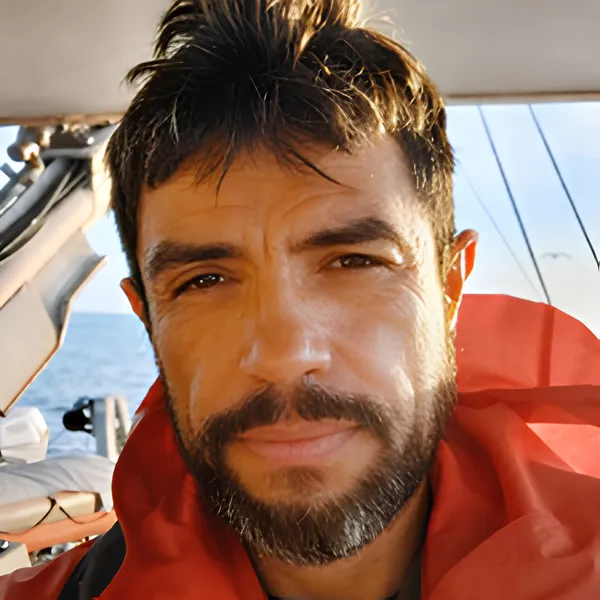
Andres Araujo
Senior Fisheries Scientist & Advisor
fisheries monitoring, survey design, Stock assessment, science advice and marine resource management.
With a career that includes scientific program leadership and extensive experience within the Canadian federal government (Fisheries and Oceans Canada — DFO), Andres has directed marine surveys, led science-to-management processes, authored and peer-reviewed technical documents, and contributed extensively to formal scientific peer review, including the Canadian Science Advisory Secretariat (CSAS) process.
His expertise spans population modelling, spatial and quantitative analysis, and fisheries management across marine invertebrates and other marine species. His work focuses on delivering defensible, evidence-based science that directly informs sustainable harvest, conservation, and resource management decisions.
Mediation, multi-party facilitation, negotiation, conflict coaching, and collaborative governance.
Sarah Webber is a conflict resolution practitioner and mediator with more than two decades of experience helping individuals, organizations, and communities navigate complex dialogue and change.
She specializes in mediation, negotiation, conflict coaching, and facilitation for natural resource, organizational, and community settings. Sarah is a Mediate BC Registered Mediator and holds specialized training in Psychology, Mediation, Negotiation, Conflict Coaching, and Ombuds practice through Vancouver Island University, the Justice Institute of British Columbia, and Osgoode Hall Law School.

Sarah Webber
Conflict Resolution Practitioner & Mediator
Oceanic Mind Science collaborates with an established network of Canadian and international professionals across fisheries science, marine operations, facilitation, collaborative governance, quantitative analysis, and conflict resolution.